
September 25, 2025
Transit Systems Deserve Ties That Last
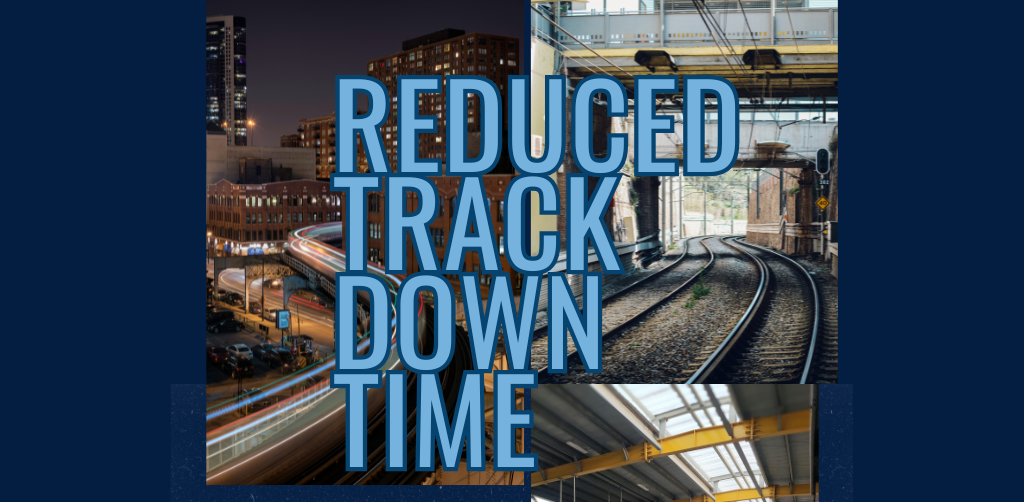
From New York to Los Angeles, Boston to Chicago, America’s transit systems move millions of people every day. For passengers, reliability is everything. Behind that reliability is an invisible but critical component: the rail tie.
When a tie fails or just needs replacement due to the limits of wood, it can mean rerouted trains, delayed schedules, and frustrated riders. For agencies already facing funding pressures, these interruptions add up to real economic costs.
The Maintenance Burden of Wood Ties
Transit environments are some of the harshest in rail:
◆ Heavy, repetitive axle loads from high-frequency service
◆ Tight curves and constant braking forces
◆ Moisture, salt, and contaminants from dense urban settings
Under these conditions, wood ties rarely achieve their theoretical 20–25 year lifespan. In practice, many transit agencies report spot replacements every 7–10 years in high-stress zones like curves, switches, and crossings. Across a large system, that equates to tens of thousands of ties pulled out and replaced every year.
Each replacement project doesn’t just cost money—it costs time. Crews need track access, trains are slowed or rerouted, and passenger confidence takes a hit.
A Real Example: New York’s 1 Line
In late 2020, New York City Transit shut down a portion of the 1 line between 137 St–City College and Van Cortlandt Park-242 St for a 15-week project. Crews replaced just over a mile of aging track and switches—a job that included pulling and reinstalling thousands of wood ties.
For riders, that meant months of rerouted service and delays. For the agency, it meant long construction windows, added expense, and pressure to complete work under intense public scrutiny.
If ties lasted longer, projects like this could be spread much further apart—reducing service interruptions and freeing up scarce capital dollars for other priorities.
The Opportunity for Composites
This is where the next generation of composite ties has a role to play. Built from recycled plastics reinforced with glass fiber, composite ties are engineered to withstand the very stresses that shorten wood’s lifespan. With projected service lives of 50+ years, they can dramatically reduce the frequency of replacements.
Imagine the impact if transit agencies could:
◆ Extend tie life from 10 years to 50+ years in key zones
◆ Cut down the number of weeks of planned downtime
◆ Reduce lifecycle costs while boosting uptime
While mainline freight has been the proving ground for composite technology, passenger transit—with its unique uptime demands—may be the sector that benefits most.
More Than Durability: A Circular Solution
Composites also carry an environmental story that aligns with public transit’s mission. Each mile of Triton Ties diverts over 500,000 lbs of challenging-to-recycle plastic from landfills and water systems, saves 800 hardwood trees, and eliminates the need for over 22,000 gallons of creosote.
Looking Ahead
Transit agencies across the U.S. and abroad have already turned to composite ties in selective projects—recognizing their durability, performance, and sustainability benefits. The challenge now is scale. As systems face growing ridership, tighter budgets, and stricter sustainability mandates, composites offer a proven path forward: longer service life, reduced downtime, and measurable environmental impact.
For agencies committed to delivering reliable service while stewarding public dollars and natural resources, composite ties are an available solution ready to strengthen the backbone of passenger rail today.